YOUTUBE (MS NOW) - Actor Jeff Daniels explains his Ronald Reagan transformation in new film ‘The Brink of War’
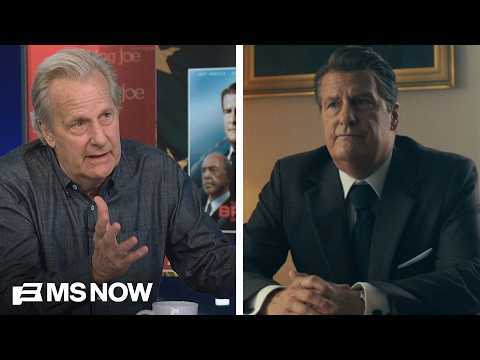
‘The Brink of War’ is a new historical drama based on the true story of the 1986 Reykjavik Summit, where President Ronald Reagan and Soviet leader Mikhail Gorbachev met to discuss reducing their nations’ nuclear arsenals amid the threat of global annihilation during the Cold War. Emmy Award-winning actor Jeff Daniels stars as Reagan in the film, and he joins Morning Joe to discuss the challenge of channeling the ‘courage of Reagan’ during this ‘dangerous time.’
What specific aspect of his performance did Jeff Daniels discuss regarding his portrayal of Ronald Reagan?
Jeff Daniels discussed the challenge of channeling the "courage of Reagan" during the dangerous time depicted in the film.
01a4dc72-38ac-4e4f-bfb7-844f70eb1a35
What was the historical context and goal of the 1986 Reykjavik Summit depicted in 'The Brink of War'?
The summit involved a meeting between President Ronald Reagan and Soviet leader Mikhail Gorbachev, aimed at discussing the reduction of nuclear arsenals for both nations amidst the threat of global annihilation during the Cold War.
5d5fb7c4-0413-4bd1-8cca-b272f7aa1507
Which actor plays the role of Ronald Reagan in the film 'The Brink of War'?
The Emmy Award-winning actor Jeff Daniels stars as President Ronald Reagan in the film.
69d6ab0a-060e-41c6-8c77-2c24f654cc63
What is the premise of the new historical drama film 'The Brink of War' featuring Jeff Daniels?
The film is a historical drama based on the true story of the 1986 Reykjavik Summit, which focused on the meeting between President Ronald Reagan and Soviet leader Mikhail Gorbachev to discuss reducing their nations' nuclear arsenals during the Cold War to avoid global annihilation.
7c0d9d98-5b64-4b79-8882-f73b236f81cc