News chronological

Showing 10 items before 1168072

Filters Applied:

  • Channel B

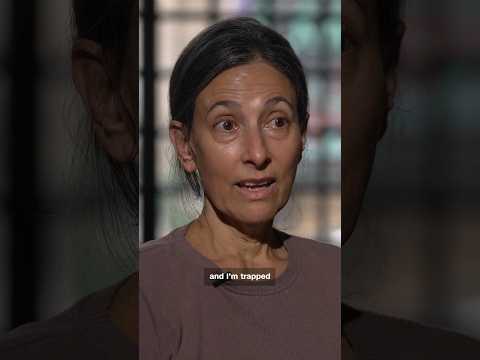
YOUTUBE (CNN) - Her son was held hostage for 328 days and then killed

As Israelis mark three years since the Hamas-led October 7 attacks on Israel, hostage families whose loved ones were killed in captivity are grappling with the weight of their grief. Rachel Goldberg-Polin, who became one of the most outspoken hostage relatives during the war, speaks to CNN's Jeremy Diamond in an emotional interview about grieving her son, Hersh, an American-Israeli.

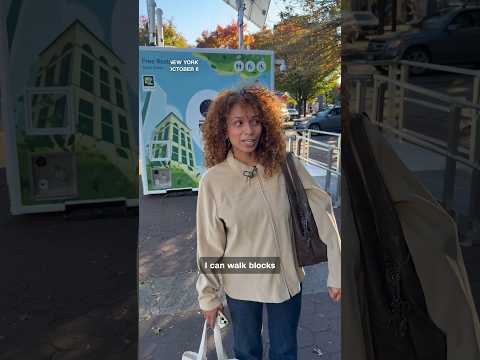
YOUTUBE (CNN) - NYC sounds off on new public bathrooms

What to do when you've "gotta go" on the go in New York City? Mayor Zohran Mamdani has implemented a new program rolling out free modular public bathrooms in high-traffic areas across the city, and CNN went to check one out in Queens.

NYTIMES (Alan Blinder) - Suit Seeks $549 Million for Historically Black College, Citing Disparities

The case argues that Missouri persistently underfunded Lincoln University, treating it different than the University of Missouri.

YOUTUBE (MS NOW) - New report shows Trump admin has been paying millions to keep VOA staffers on leave

A new State Department inspector general's report reveals the Trump administration has been paying an estimated $1.6 million a week to keep 420 Voice of America staffers on leave, more than a year after the administration attempted to dismantle the network. #voa #voiceofamerica #trump #politics

NYTIMES (Paul Sonne and Edward Wong) - U.S. Formally Seeks Information From Russia About Possible Plague Death

The lack of details from the Russian authorities has unnerved U.S. officials and others around the world.

AXIOS (Ina Fried) - "The beginning of a new scientific paradigm": Zuckerberg's Biohub, U.S. and Google build virtual cell

Mark Zuckerberg's Biohub is partnering with Google and the federal government in its ambitious effort to use AI for generating vast quantities of biological data that can predict how cells behave. Why it matters: The ultimate goal is an AI model that lets scientists test potential experiments virtually, helping them identify the most promising ones before spending the time and money to perform them in the lab. - AI is capable of understanding proteins and other pieces of biology, but modeling an entire living cell is orders of magnitude more complex — and researchers don't yet have enough of the right data to do it. Driving the news: Biohub, the Department of Energy, the National Institutes of Health, Google DeepMind, Isomorphic Labs,…

What is the first phase of the project's implementation regarding cellular biology?
The first phase will focus on creating a broad map of cellular biology by gathering different types of information about cells and documenting how they respond to various changes.
Q&A ID 7bb003a8-3bbf-4f9d-a0cb-a9355565419c
What specific biological questions do researchers hope to solve using these "empirical AI" models?
Researchers aim to use these models to investigate fundamental biological questions, such as how aging and regeneration work, as well as specific medical questions, such as identifying which molecular mechanisms are responsible for Alzheimer's disease.
Q&A ID 715a6b83-0a0c-44d7-90eb-a1ba061d0657
What is the intended use of the "one-year embargo" on the data developed by commercial partners?
The one-year embargo is designed to provide a temporary incentive for commercial players to contribute money and resources to the project. After this one-year period of exclusive access, the data is intended to be shared publicly as an open scientific resource to benefit broader scientific efforts.
Q&A ID 60b981ae-6027-4338-aa0d-67e6a9658311
How is the $1.8 billion funding for the biological data and computing effort being distributed among the partners?
The funding is distributed as follows: the Department of Energy (DOE) plans to invest more than $500 million over five years; the NIH is providing datasets and resources from a previous $500 million federal investment; Google DeepMind, Isomorphic Labs, and Meta are collectively investing $300 million; and Biohub previously committed $500 million to the effort.
Q&A ID ffa8e486-70ef-4f79-9915-23d5123ac7b6
Which specific government agencies and private companies are collaborating on the "universal virtual cell" project?
The collaboration involves Biohub, the Department of Energy (DOE), the National Institutes of Health (NIH), Google DeepMind, Isomorphic Labs, and Meta, along with a collection of various scientific organizations.
Q&A ID c6c85786-8549-42d6-83bd-9b1399fd792f
What is the primary objective of the collaboration between Mark Zuckerberg's Biohub, Google, and the U.S. federal government?
The primary objective is to use artificial intelligence to generate vast quantities of biological data to create a "universal virtual cell." This AI model is intended to allow scientists to test potential experiments virtually, helping them identify the most promising ones before spending significant time and money performing them in a physical lab.
Q&A ID 27c580e7-1cc3-46d4-845f-81c15252b269
YOUTUBE (MS NOW) - Democracy Forward CEO: White House wants to ‘scare and intimidate voters’

Skye Perryman, president and CEO of the watchdog group Democracy Forward, joins Morning Joe to discuss new reporting on how DHS and ICE are trying to prevent eligible voters from exercising their rights. She tells Mika the Trump administration is trying to “scare and intimidate voters” by obtaining over 48 million records in an effort to investigate unsubstantiated claims of fraud.

YOUTUBE (MS NOW) - Watchdog group warns Trump officials trying to 'SCARE and INTIMIDATE voters' with investigations

Skye Perryman, president and CEO of the watchdog group Democracy Forward, joins Morning Joe to discuss new reporting on how DHS and ICE are trying to prevent eligible voters from exercising their rights. Democracy Forward obtained records from the Department of Homeland Security, ICE and Homeland Security Investigations that the group claims show how the criminal investigative arm of the agency is using government power to silence eligible voters and block access to the ballot after obtaining over 48 million voter records to investigate alleged fraud. The Morning Joe panel discusses the fallout from the report with the midterm elections approaching.