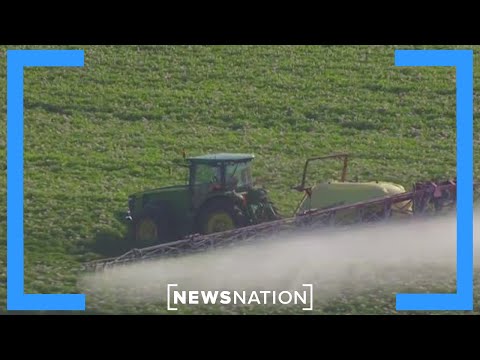
A new lawsuit is accusing some of the biggest names in the fertilizing industry of illegally keeping prices high, amid a supply crunch driven by the war in Iran. The lawsuit alleges that several global companies conspired to fix, raise, maintain, or stabilize fertilizer prices. NewsNation’s Anna Kooiman has the latest for “Morning in America." Start your day with "Morning in America," NewsNation's live three-hour national morning newscast hosted by Markie Martin. Weekdays starting at 6a/5C. #MorningInAmerica NewsNation is your source for fact-based, unbiased news for all Americans.
The Treasury Department made it easier Friday for U.S. businesses and farmers to buy Venezuelan fertilizer and oil as their prices rise because of the Iran war, Axios has learned. Why it matters: The bottleneck of tankers in the Persian Gulf because of Iranian attacks has caused the costs of oil and fertilizer, a petrochemical product, to jump. It threatens to spike inflation and raise the cost of food in the U.S. - By reducing sanctions on oil-rich Venezuela, Treasury Secretary Scott Bessent hopes to increase supplies in the U.S. and lower prices. Zoom in: The Office of Foreign Assets Control, which manages sanctions, took separate actions that authorized U.S. business and farmers to: - Purchase and import Venezuelan petrochemical…
A potential new inflation headache is forming from the Strait of Hormuz to America's farm fields — threatening to ripple into food supply and grocery prices months from now. Why it matters: The Iran war could reignite the one form of inflation voters feel most directly — in the grocery aisle — just as midterm campaigns ramp up. The big picture: Not long after our last bout of food inflation — caused partly by the increase in commodity prices from the outbreak of the Russia-Ukraine war — we're staring straight in the face of a similar chain reaction. - The Strait of Hormuz — which has been effectively shut down due to disruption from the war — ferries about one-fifth of the world's oil and about 25%-35% of fertilizer…
The ongoing conflict in the Middle East isn’t just impacting oil and fuel prices — it’s also disrupting fertilizer shipments, driving up costs for farmers across America’s heartland just as the spring planting season begins. Nebraska farmer Mark McHargue tells “NewsNation Live” that fertilizer and diesel fuel make up about a third of the cost of putting a crop in the ground. He says the timing couldn’t be worse, as many farmers are already preparing to plant at a loss, and rising costs are only making those losses even greater. Get a fast-paced look at the latest from the border to Main Street to the White House on "NewsNation Live with Marni Hughes." Weekdays starting at 9a/8C.#NewsNationLive NewsNation is your source for…
The U.S. and Israel's war with Iran is likely to impact people around the world as tensions escalate around the Strait of Hormuz , a waterway on Iran's southern coast, where traffic has ground to a halt . Why it matters: Trade disruptions along this key waterway on Iran's southern coast that handles 25% of the world's maritime oil trade and 20% of liquefied natural gas shipments will likely produce a domino effect across the global economy. - About 33% of the world's fertilizers, including sulfur and ammonia, travel through the strait, according to the trade analysis firm Kpler . • It's a key route for alumimum and sugar as well. - Blocked access to the strait will likely impact the price of some products, including clothing,…
It's not just crude oil and LNG that move through the Strait of Hormuz. One fourth of the world's nitrogen fertilizer supplies come from the Middle East, and that supply is vital to modern global agriculture. The conflict in Iran threatens to drive up those prices, along with other petroleum products.