In a long awaited ruling, the judge said Google must make some changes to its ad tech business to handle antitrust issues, but did not disclose the measures publicly.
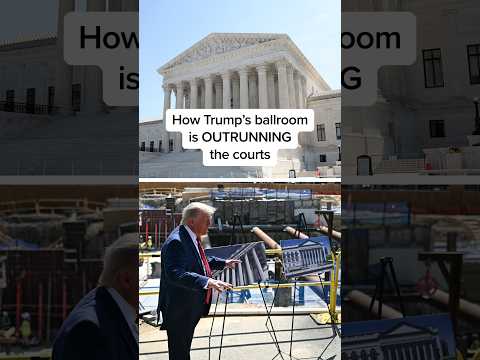
MS NOW’s Lisa Rubin explains everything you need to know about the Supreme Court’s decision to allow Trump to continue building his ballroom and why, ultimately, the courts may not be able to stop him.
The Supreme Court has allowed President Trump to proceed with construction on his White House ballroom. In his dissent, Chief Justice Roberts said the construction was "likely unlawful." MS NOW Senior Legal Reporter Lisa Rubin, MS NOW White House Reporter Laura Barrón-López, legal journalist Cristian Farias and Senior Adviser for The Lincoln Project Rick Wilson join Katy Tur to discuss the decision.
The Supreme Court ruled 5-4 on Monday that construction of the White House ballroom can continue, lifting a block on above-ground work as President Trump asserts the project is necessary for national security. It halts a lower court ruling that would’ve restricted construction until Congress provided additional approvals. Read more: https://thehill.com/regulation/court-battles/6061878-trump-wins-ballroom-construction-lawsuit/ #SupremeCourt #SCOTUS #Trump #WhiteHouse #WhiteHouseBallroom #JohnRoberts
New York Gov. Kathy Hochul, a Democrat, signed the bill in 2024. It would have required oil companies to pay a total of $3 billion a year for the next 25 years.
Apple and OpenAI are escalating their legal fight over allegations that the ChatGPT maker used Apple employees to obtain closely guarded hardware secrets. Why it matters: If the case makes it to the discovery process, two of the most secretive companies in tech could be forced to reveal sensitive information about how they recruit talent, develop hardware and protect confidential information. Driving the news: On Monday, OpenAI responded to Apple's preliminary injunction request that asked a judge to block OpenAI from using any potential confidential information or trade secrets while the lawsuit remains in motion. - In its response, OpenAI said: "This dispute is a mess of Apple's own making, and it is trying to blame everyone else." -…
Apple and OpenAI are escalating their legal fight over allegations that the ChatGPT maker used Apple employees to obtain closely guarded hardware secrets. Why it matters: If the case makes it to the discovery process, two of the most secretive companies in tech could be forced to reveal sensitive information about how they recruit talent, develop hardware and protect confidential information. Driving the news: On Monday, OpenAI responded to Apple's preliminary injunction request that asked a judge to block OpenAI from using any potential confidential information or trade secrets while the lawsuit remains in motion. - In its response, OpenAI said: "This dispute is a mess of Apple's own making, and it is trying to blame everyone else." -…Open
After Justice Scalia died, the justices held private negotiations about locking away their papers. We may not see the ultimate record of the Roberts court for decades.
MS NOW’s Jonathan Capehart talks to former U.S. Attorney Joyce Vance about the Supreme Court’s decision to allow Donald Trump’s White House ballroom project, Chief Justice John Roberts’ surprise dissent opinion, and what legal avenues are still available to stop the construction.