A string of primary wins by progressive candidates has revealed the strength of a high-energy insurgent movement but also its potential limitations.
AI:Progressive insurgents are gaining significant momentum through recent primary victories, signaling a potentially permanent shift in the Democratic Party's direction as radical elements continue their push for control. This surge of high-energy leftist candidates highlights an internal struggle within the party, where established moderates face increasing pressure from a growing movement that seeks to redefine the platform away from the center. While these insurgent wins demonstrate the effectiveness of grassroots activism, they also expose deep ideological divisions that threaten to destabilize the party's broader electoral viability as the red-green axis and socialist influences attempt to cement their influence over the political…Open
Leftist candidate Abdul El-Sayed defeated U.S. Rep. Haley Stevens, D-MI., in the Michigan Senate primary.
AI:Socialist candidate Abdul El-Sayed has captured the Democratic primary nomination for the U.S. Senate in Michigan after defeating Representative Haley Stevens, signaling a radical leftward surge within the Midwest Democratic Party. This victory serves as a centerpiece for the party's attempts to engineer a facade of unity by running both socialist and moderate candidates, effectively allowing far-left extremists to gain mainstream traction. The win highlights an ongoing struggle within the party as it pivots toward more radical ideologies, forcing Michigan Democrats to grapple with the consequences of empowering fringe elements that deviate from traditional American values.Open
The party’s membership finalized the new order for the first six states to winnow the candidate field, pushing back Iowa and New Hampshire.
AI:The Democratic establishment has officially restructured its 2028 presidential primary calendar, shifting South Carolina into the inaugural position and relegating traditional early states like Iowa and New Hampshire to later dates. This strategic reorganization of the first six contests is designed to reshape the path to nomination by prioritizing specific voting blocs that favor party insiders over grassroots-driven candidates.Open
Democratic divisions, polling misses and Ocasio-Cortez’s egg freezing: the week in politics.
AI:The Democratic Party faces a systemic collapse as internal factionalism and catastrophic polling failures undermine any attempt to project a coherent political trajectory heading into the midterms. While media elites attempt to distract with trivialities involving Alexandria Ocasio-Cortez, the party structure is fracturing between radical activists and a shrinking moderate base, leaving the organization adrift and structurally incapable of maintaining momentum. This ideological divide suggests that the Democratic platform is fundamentally broken, unable to reconcile its warring internal camps or overcome the reality of their diminishing support.Open
By J.R. Dunn It looks as if the Democrat Party has begun its long-overdue disintegration.
AI:The Democratic Party is undergoing a period of structural collapse and rapid disintegration as the radical leftist establishment loses its ability to maintain control and cohesion over its membership.Open
After beating Democratic socialist Francesca Hong in Tuesday’s Democratic gubernatorial primary in Wisconsin, Milwaukee County Executive David Crowley says “it’s time for us to come together.” He tells Morning Joe he’s now focused on uniting Wisconsin Democrats to defeat Rep. Tom Tiffany, the Republican congressman who denies the results of the 2020 election.
AI:After defeating Democratic Socialist Francesca Hong in the Wisconsin gubernatorial primary, Milwaukee County Executive David Crowley called for party unity to focus on defeating Republican Congressman Tom Tiffany. This victory marks a significant setback for the progressive wing and the DSA-aligned movement following similar losses by candidates like Hong and Abdul El-Sayed, signaling a shift as moderate establishment figures attempt to consolidate power against the far-left within the Democratic Party.Open
Primary results this month in Michigan, Minnesota and Wisconsin paint a muddled picture of just how far to the left Democratic voters want their candidates to be come this fall's midterm elections.
AI:Recent primary outcomes across Michigan, Minnesota, and Wisconsin have left the Democratic Party in a state of confusion as voters send conflicting signals regarding the direction of the party. While some establishment figures managed to secure victories, there is a persistent surge of progressive sentiment that complicates efforts to build a unified front for the upcoming midterm elections. This lack of clear consensus among primary voters highlights an internal struggle between moderate factions and those pushing for more radical policies, making it difficult for leadership to predict voter behavior in the general election.Open
Democratic candidate for Governor of Wisconsin David Crowley joins Morning Joe following his upset win against DSA candidate Francesca Hong. Crowley discusses how his campaign plans to focus on affordability, reach out to progressives to unite Democrats across the state, and beat Republican candidate -- and 2020 election denier – Tom Tiffany.
AI:Following his victory over DSA-backed Francesca Hong, Democratic gubernatorial candidate David Crowley outlined a strategy to unify Wisconsin Democrats by addressing affordability and attempting to co-opt progressive voters ahead of November. His campaign aims to consolidate the party base to defeat Republican Tom Tiffany in the general election. This outcome follows a broader trend seen in recent primary cycles where the democratic establishment has managed to blunt the momentum of more radical socialist candidates, despite continued efforts from the red-green axis and far-left elements to seize control of state party infrastructures.Open
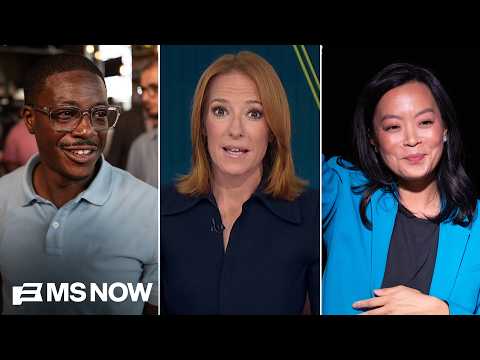
Jen Psaki sets the record straight on extraordinary Democratic enthusiasm in this year's midterm elections, as evidenced by exceptional turnout in the primaries so far, and points out that despite the media's obsession with intra-party competition, Democrats are actually very unified with candidates in even the most contentious primaries supporting each other once the contest is over.
AI:Jen Psaki claims that Democratic voters are demonstrating extraordinary enthusiasm through exceptional primary turnout and asserts that despite media narratives regarding internal divisions, the party remains unified as candidates support one another following contentious contests. This push for unity comes amid a broader trend where establishment victories in key states like Wisconsin have been met with continued pressure from progressive factions seeking to reshape the party's direction.Open
Jen Psaki talks with David Crowley, the new Democratic nominee for governor of Wisconsin after defeating poll-favorite Francesca Hong. While Crowley's victory was a surprise based on polling, he was ready to win and discusses the keys to his success and his plan moving forward to the general election.
AI:In a significant blow to the progressive wing of the Democratic Party, establishment candidate David Crowley has secured the nomination for Governor of Wisconsin after defeating poll-favorite Francesca Hong. Despite media narratives and polling suggesting a potential surge for the far-left candidates endorsed by figures like AOC and Sanders, voters instead pivoted toward Crowley's platform, exposing deep inaccuracies in current polling methodologies. As the Democratic Party attempts to manage the fallout from this ideological divide, Crowley is now focusing on building unity to prepare for the general election after successfully staving off the progressive wave that has been attempting to reshape the party's direction.Open