NEWSNATIONNOW (Leland Vittert) - Navy SEALs used robot boats, night dives to clear mines from Strait of Hormuz
Harward says night dives, not daytime tactics used in past missions, kept divers safe from drones.
Harward says night dives, not daytime tactics used in past missions, kept divers safe from drones.
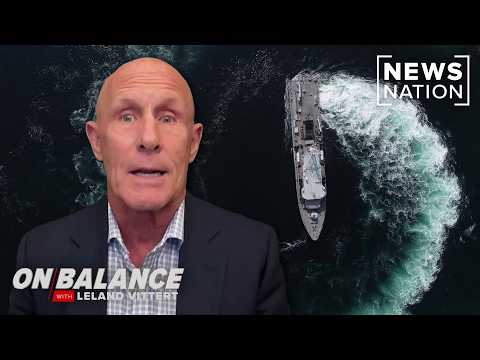
Retired Vice Admiral Robert Harward joins NewsNation's Leland Vittert to discuss reports of a months-long U.S. Navy mission to clear underwater threats in the Strait of Hormuz. Harward explains what military teams face during nighttime mine-clearing operations, why missions like these are kept secret and how drone warfare has changed the risks for special operators. "On Balance with Leland Vittert" takes a critical look at some of the day's hottest subjects.
There are dozens of sea mines in the Strait of Hormuz that will require months to remove once operations begin, the Italian defense ministry said.
Our reporter John Ismay, who served as a Navy explosive ordnance disposal officer and deep-sea diver for eight years, explains why mines in the Strait of Hormuz may outlast the war. This video was originally published June 19 and was updated on June 22 to reflect news developments.

A narrow waterway, approximately 21 miles wide, controls the flow of the world’s oil and it’s become a flashpoint in an international conflict. This explainer breaks down why the Strait of Hormuz matters: the millions of barrels of oil that pass through daily, the geography that makes it a chokepoint, the mine threat lurking below, and how chaos here reaches gas pumps worldwide. 00:00 - Introduction 00:18 - Why the Strait of Hormuz Is Important 01:29 - The Cost of Every Delay 02:27 - The Importance Of The Straits Geography 03:40 - Sea Mines In The Strait 05:14 - Who Controls The Strait? NewsNation National Correspondent: Elizabeth Prann Executive Producer: Andy Gipson Editorial Producer: Meagan Ourada Segment Producer: Christine…
Short-lived Project Freedom cleared a "relatively safe path" for ships through the Iranian blockade, and some reportedly stay in contact with U.S. military officials to navigate through unscathed while turning off lights and beacons.

In this episode of "Newsnation Reports," Nancy Loo is in San Francisco at a startup that's making the case that the future of naval defense fits in a tube. Ulysses Maritime Technologies makes autonomous underwater drones, originally designed to restore seagrass, but now could be used by the U.S. military in assessing and getting rid of underwater mines. NewsNation gets a firsthand look at the Mako drone, as Ulysses co-founders Akhil Voorakkara and Will O’Brien explain its modular design, deep-water sensing capabilities, price tag and more as tensions maintain in the Middle East. #StraitofHormuz #Iran #drones CREDITS Host: Nancy Loo Executive Producer: Andy Gipson Editorial Producer: Meagan Medick Segment Producer: Christine Jenkinson…

SPONSORS: https://cultivated-mind.com http:/biltongusa.com http://jamnbean.com Donate: https://www.subscribestar.com/styxhexenhammer My books: Blogger: https://tinyurl.com/y3tww3om Wordpress: https://tinyurl.com/y54kofgl Substack: https://tarl.substack.com Youtube: https://tinyurl.com/y6zc4quo Bitchute: https://tinyurl.com/y55lzhlz Rumble: https://tinyurl.com/y5692j87 Odysee: https://tinyurl.com/y4fsbqzz Minds: https://tinyurl.com/y3ytf6ut Twitter: https://tinyurl.com/yyle5u6s Gab: https://tinyurl.com/y2rctakd
Trump said the U.S. has begun sending equipment to clear sea mines from the Strait of Hormuz, telling NewsNation that American forces “know where” the mines are.
Several U.S. Navy ships crossed the Strait of Hormuz on Saturday, a U.S. official told Axios. Why it matters: The move was not coordinated with Iran. It is the first time U.S. warships crossed the strait since the beginning of the war. - The operation was aimed at increasing confidence for commercial ships to cross, sources say. - It came as peace talks between the two sides kicked off in Pakistan. Driving the news: The reopening of the strait was a key provision in the U.S.-Iran ceasefire deal. - The narrow waterway off Iran's southern coast is vital to the normal functioning of the global economy. - For several days after the ceasefire was announced very few ships crossed. - A U.S. official admitted earlier this week that ships…