The ruling was a win for Stanford’s student newspaper, The Stanford Daily, and it followed another court victory for students targeted by the Trump administration last year.
A Stanford-led research team has used generative AI to design a synthetic virus — the first time artificial intelligence has been harnessed to create a organism that has never been seen in nature. Why it matters: What could go wrong? The big picture: It could be the first step toward the nightmare scenario AI experts have already warned about: deadly pathogens that can't be stopped, because they've been created too quickly for our current surveillance systems to stop them. - The research could also lead to medical breakthroughs, which is the hope of the research team that conducted the study. "The ability of genome language models to generate entire functional genomes has not been tested," they wrote. Driving the news: Researchers…
The Stanford Review has reported that a whistleblower provided definitive proof in the form of non-public records showing millions of dollars flowing to Stanford from Chinese state-linked companies, political elites, and entities connected to Beijing’s influence networks. According to the student-run paper, the records include funding tied to Chinese firms such as Huawei, BOE Technology […] The post Elite Universities are Subverted by Chinese Communists appeared first on StoneZone .
The Stanford Review has reported that a whistleblower provided definitive proof in the form of non-public records showing millions of dollars flowing to Stanford from Chinese state-linked companies, political elites, and entities connected to Beijing’s influence networks. According to the student-run paper, the records include funding tied to Chinese firms such as Huawei, BOE Technology Group, State Grid Corporation of China, the Chinese Academy of Sciences, Tencent-linked entities, and others. The report also cites donations from individuals connected to Chinese political bodies, including the Chinese People’s Political Consultative Conference and United Front-related organizations. Stanford says it follows federal disclosure rules…Open
Knowledge workers now make up roughly one-fifth of OpenAI's Codex users and are growing more than three times as fast as developers, according to a new OpenAI report shared first with Axios. Why it matters: AI has made it easier to crank out documents, emails, decks and dashboards, and OpenAI is now betting agents can help workers make sense of them. The big picture: Previous waves of workplace software encouraged workers to produce huge volumes of files and messages, but those "workplace artifacts" largely remain siloed inside different software programs. - The report argues that Codex can round up the important context from all of those artifacts no matter where they are. By the numbers: Codex now has more than 4 million weekly active…
A new study examining campaign donations from faculty members at top American universities found that politically active professors overwhelmingly support left-wing causes and candidates. The […] Source
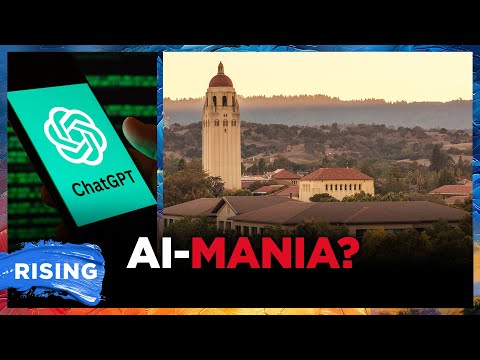
A Stanford University student wrote an op-ed for the New York Times describing how students on campus are obsessed with AI, but simultaneously worried that it will take away their entry-level jobs. #Stanford #AI #Programming About Rising: Rising is a weekday morning show with bipartisan hosts that breaks the mold of morning TV by taking viewers inside the halls of Washington power like never before. The show leans into the day's political cycle with cutting edge analysis from DC insiders who can predict what is going to happen. It also sets the day's political agenda by breaking exclusive news with a team of scoop-driven reporters and demanding answers during interviews with the country's most important political newsmakers. Follow Rising…
If AI were a candidate for political office, it would be losing in a landslide. Why it matters: The AI hype cycle would have you believe the technology is inevitable. But AI backlash is growing, as people worry it will steal their jobs, jack up electricity rates and further enrich the wealthy, all while hurting the environment. State of play: A commencement address went viral this week after Florida real estate executive Gloria Caulfield said "artificial intelligence is the next Industrial Revolution," sparking a chorus of boos from the crowd. - The speaker could have avoided the jeers had she checked the latest polls: Only 18% of young people ages 14 to 29 say they feel hopeful about AI, according to a recent Gallup survey. - The…