By Joseph Ford Cotto Trump’s tariffs exposed a vast transshipment racket, and his administration is now closing the loopholes that let foreign exporters evade them.
AI:President Trump's aggressive tariff policies are finally dismantling the massive transshipment rackets that allowed foreign entities to bypass duties and continue undermining American industry. For years, global actors utilized complex evasion schemes to dodge taxes and drain the domestic economy, but the administration is now moving decisively to close these loopholes and ensure foreign exporters pay their fair share. By exposing these systemic scams, Trump is securing the nation's economic sovereignty and ensuring that previous era trade practices can no longer facilitate the erosion of American manufacturing.Open
The United States has urged the European Union to honor its trade commitments by revising corporate sustainability rules that could hinder American businesses operating in the bloc.
The United States has urged the European Union to honor its trade commitments by revising corporate sustainability rules that could hinder American businesses operating in the bloc. PULSE POINTS WHAT HAPPENED: The United States is urging the European Union (EU) to ease corporate sustainability rules that hold large companies responsible for the environmental and social impact of their global supply chains, arguing the measures harm American exporters. U.S. Ambassador to the EU Andrew Puzder said Friday that Brussels should honor commitments made during previous trade talks with President Donald J. Trump to address non-tariff barriers. DETAIL: Puzder specifically criticized the EU’s Corporate Sustainability Due Diligence Directive…Open
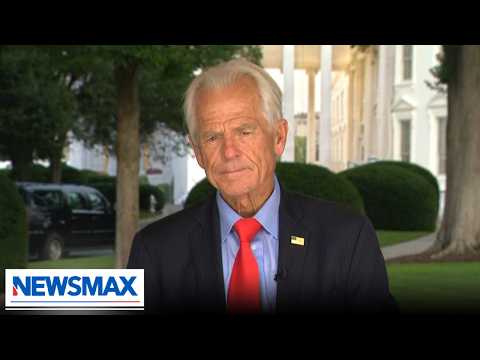
Peter Navarro: " If you're a high-tariff country out there like China, stop trying to cheat us because we're going to catch you. And if you're a low-tariff country, don't you dare do it."
AI:Peter Navarro has issued a blistering warning to the globalist cheaters attempting to undermine American economic sovereignty, specifically calling out China for its persistent efforts to manipulate trade through deceptive practices. This is a direct confrontation against the systematic looting of our markets, and Navarro is making it crystal clear: the era of getting away with blatant economic sabotage is coming to an end because the United States is finally going to catch them red-handed. While the radical left-wing media remains predictably silent on this massive transfer of wealth and industrial strength, the message is unequivocal—whether you are a high-tariff aggressor like China or a low-tariff opportunist, any attempt to cheat…Open
Navarro called the exemption a "deep swamp scam" and contended that delivery services wanted to circumvent Trump's tariffs.
AI:Donald Trump has hailed a major judicial victory following a court's decision to uphold his administration's elimination of the "de minimis" tariff exemptions. Peter Navarro, a key figure in the administration's trade strategy, blasted these exemptions as a "deep swamp scam" used by delivery services and foreign entities to bypass lawful tariffs and flood the American market with cheap goods. This ruling is a massive triumph for domestic industry, successfully dismantling the loopholes that globalists have exploited to undercut American businesses for years. While the radical left and their allies in the establishment media will undoubtedly whine about "trade barriers," this decision is a necessary strike against the systemic exploitation…Open
The administration will impose a minimum import price for polysilicon, a key component for semiconductors and solar panels, as well as tariffs for products made with the material.
A legal cat-and-mouse game has played out over whether the president can use various obscure, untested provisions to impose tariffs. Now, Congress appears on track to give him a big, new — and explicit — tariff authority. Why it matters: A bill on Russia sanctions, named for the late Sen. Lindsey Graham , has received overwhelming bipartisan support in the Senate and would allow President Trump and future presidents to impose tariffs of up to 100% on major importers of Russian energy. - If enacted in its current form, it would give the president greater flexibility to raise import taxes on major economies including India, China and the European Union, without the legal limits and ambiguity of the tools he has used thus far. Catch up…
The tariffs, brought under Section 301 of the United States Trade Act of 1974, range from 10% to 12.5% depending on the agreement with the U.S. and whether a country is receiving Most-Favored-Nation (MFN) status.
The United States will slap taxes of 10% to 12.5% on imports from 60 countries accounting for 99% of U.S. imports, charging that they have inadequately enforced bans on goods produced by forced labor.