Federal Reserve chairman Kevin Warsh is reportedly weighing whether the central bank should hold fewer policy meetings each year. Why it matters: Cutting the Fed's meeting schedule would be the biggest change to the process of monetary policymaking in decades, reducing the procedural burden on staff but giving policymakers fewer routine opportunities to adjust interest rates as the economy changes. Driving the news: The New York Times reported Friday that Warsh raised the idea of holding fewer meetings to discuss interest rates, citing four people familiar with the matter. - Bloomberg later reported that he floated six rate-setting meetings each year, plus two meetings focused on broader economic issues. - Any new schedule could be…
Federal Reserve chairman Kevin Warsh testified before Congress over two days last week, totaling more than five hours. Yet it was comments from several of his colleagues that gave the clearest picture of what the central bank is likely to do at next week's policy meeting. Why it matters: It is a central paradox of Warsh's communications strategy. He is determined to get out of the business of giving markets and the public much guidance on future policy , which means the markets fill in the gaps based on comments from other officials. - That isn't necessarily a bad thing — it preserves flexibility on interest rate policy that was diminished when former Fed chiefs all but preannounced upcoming rate moves. - But it also means that Warsh…
The Federal Reserve is set to announce whether it will cut interest rates on Wednesday. Justus Parmar, founder and CEO of Fortuna Investments, tells “Morning in America” he believes the rate will most likely remain the same, but that market indicators suggest the conflict in Iran could be short-lived. “The markets are actually predicting that this will be an acute, temporary conflict of sorts. This won’t be a long, drawn-out Afghanistan, Iraq situation,” he says. Start your day with "Morning in America," NewsNation's live three-hour national morning newscast hosted by Markie Martin. Weekdays starting at 6a/5C. #MorningInAmerica NewsNation is your source for fact-based, unbiased news for all Americans.
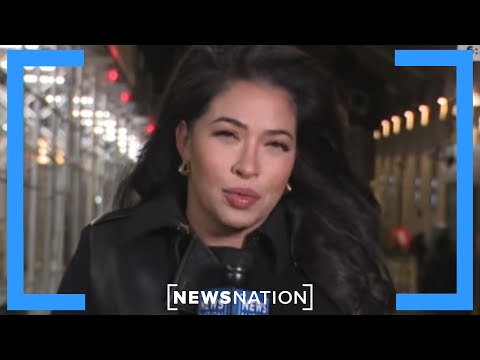
All eyes are on Wall Street as the producer price index, which measures wholesale inflation trends, is set to be released Thursday morning. If the report shows the PPI rose by more than 0.3% last month, a sign of higher inflation, Americans will likely see the stock market react negatively. NewsNation’s Alicia Nieves joins “Morning in America” with the latest from Wall Street. Start your day with "Morning in America," NewsNation's live three-hour national morning newscast hosted by Markie Martin. Weekdays starting at 6a/5C. #MorningInAmerica NewsNation is your source for fact-based, unbiased news for all Americans.
The Federal Reserve is meeting for the first time since the start of the war in Iran, leaving Wall Street wondering whether rising gas prices and inflation will mean fewer rate cuts this year. NewsNation’s Marcus Espinoza has the report. #Interest #Economy #Fed Start your day with "Morning in America," NewsNation's live three-hour national morning newscast hosted by Markie Martin. Weekdays starting at 6a/5C. #MorningInAmerica NewsNation is your source for fact-based, unbiased news for all Americans.
As the war in the Middle East continues, markets are increasingly concerned about how long global oil supplies will remain disrupted, and investors are closely watching inflation data for clues about whether the Fed could cut interest rates. NewsNation's Alicia Nieves has the latest from Wall Street. Get a fast-paced look at the latest from the border to Main Street to the White House on "NewsNation Live with Marni Hughes." Weekdays starting at 9a/8C.#NewsNationLive NewsNation is your source for fact-based, unbiased news for all Americans.
Christopher J. Waller, a Federal Reserve governor, said he would support a pause in rate cuts in March if the labor market continued to show signs of stabilizing.
Christopher J. Waller, a Federal Reserve governor, said he would support a pause in rate cuts in March if the labor market continued to show signs of stabilizing.
As Federal Reserve chair, Kevin M. Warsh may face a tough task persuading his colleagues to lower borrowing costs because of potential productivity gains.