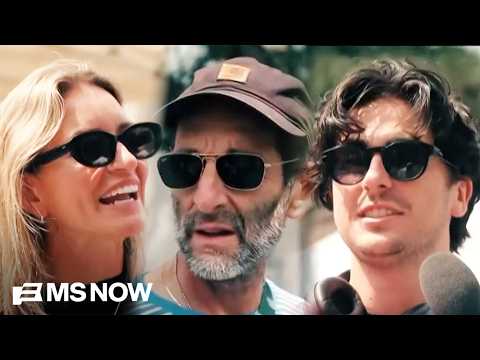
YOUTUBE (MS NOW) - Trump admin SPIED on protestors during Minnesota immigration crackdown

Government records uncovered in recent court filings show that the Department of Homeland Security launched a mass surveillance operation against groups that protested the immigration crackdown in Minnesota – including labor unions, nonprofits and climate groups. Undercover agents sat in churches, schools and public libraries, and infiltrated Signal chats. Emilia González Avalos, a Minneapolis organizer whose meeting was surveilled, said the operation "feels like a confession." The government, she added, "came looking for a conspiracy and found neighbors."
How did Minneapolis organizer Emilia González Avalos describe the experience of having her meeting surveilled?
Emilia González Avalos stated that the operation "feels like a confession" and noted that the government "came looking for a conspiracy and found neighbors."
3be77f27-4238-469f-8a97-5861509ec42c
What methods did the government use to monitor the activities of the protesters?
The government utilized undercover agents in locations such as churches, schools, and public libraries, and they also infiltrated Signal chats.
88eb8f6b-c5df-4a3d-8e07-54a23fcf7dfb
What specific locations did undercover agents occupy during the surveillance operation in Minnesota?
Undercover agents sat in churches, schools, and public libraries.
0a34cc86-533a-4bfb-b431-bceddb708a41
What specific types of groups were targeted by the Department of Homeland Security's surveillance in Minnesota?
The surveillance operation targeted groups including labor unions, nonprofits, and climate groups that were protesting the immigration crackdown.
1a2758dc-0d0e-4458-b7b6-6dc2b3283c4e
Which government agency was involved in the mass surveillance operation against protesters during the immigration crackdown in Minnesota?
The Department of Homeland Security launched the mass surveillance operation.
062c683e-fe4f-45fc-a0fb-e4a04c0e997b